Silent
Silent provides the tools for seekers to recognize their path and enables self-reliance for spiritual and magickal growth.
Seekers gain insight from his work and find their inner calm from his ability to listen and help others reflect.

We speak of death fluently.
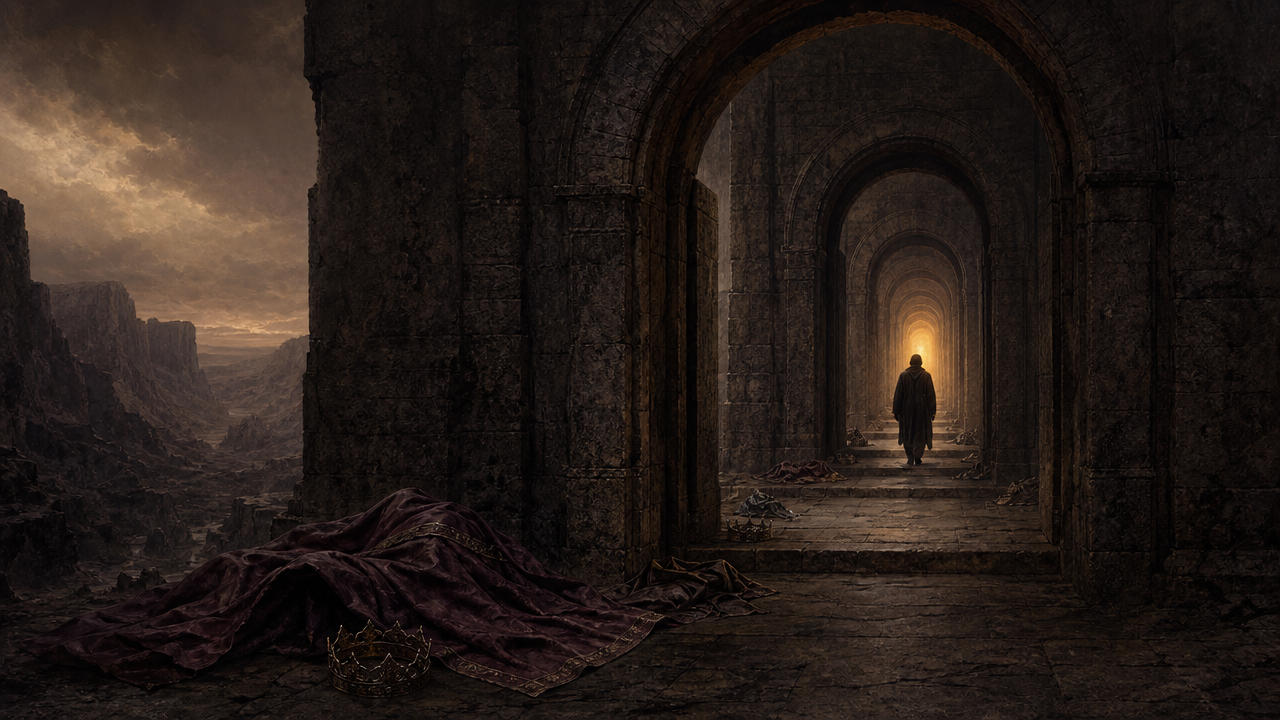
In our community, death is not a stranger. We have built altars for our beloved dead. We have marked the thinning of the veil, called the names of those who have gone before us, made offerings, held space at the threshold. We carry the bones of our tradition in our hands and we know — in a way that much of the wider culture has forgotten — that death is not the end of something but a part of the great turning.
And yet.
When it is our mother in the hospital bed, when it is our partner receiving the diagnosis, when it is ourselves sitting with a timeline — the knowing does not always hold. The framework we have built for the dead does not always translate to the dying. The ritual literacy we carry does not always tell us what to do at 2am when someone we love is frightened and we are frightened and there is nothing left to say.
Theory is not enough. Presence is what is needed. And presence is a practice.
I have been sitting with people at the threshold of death for years — as a spiritual director, as a death doula, as someone whose own tradition has made him intimate with the territory that most of the world avoids.
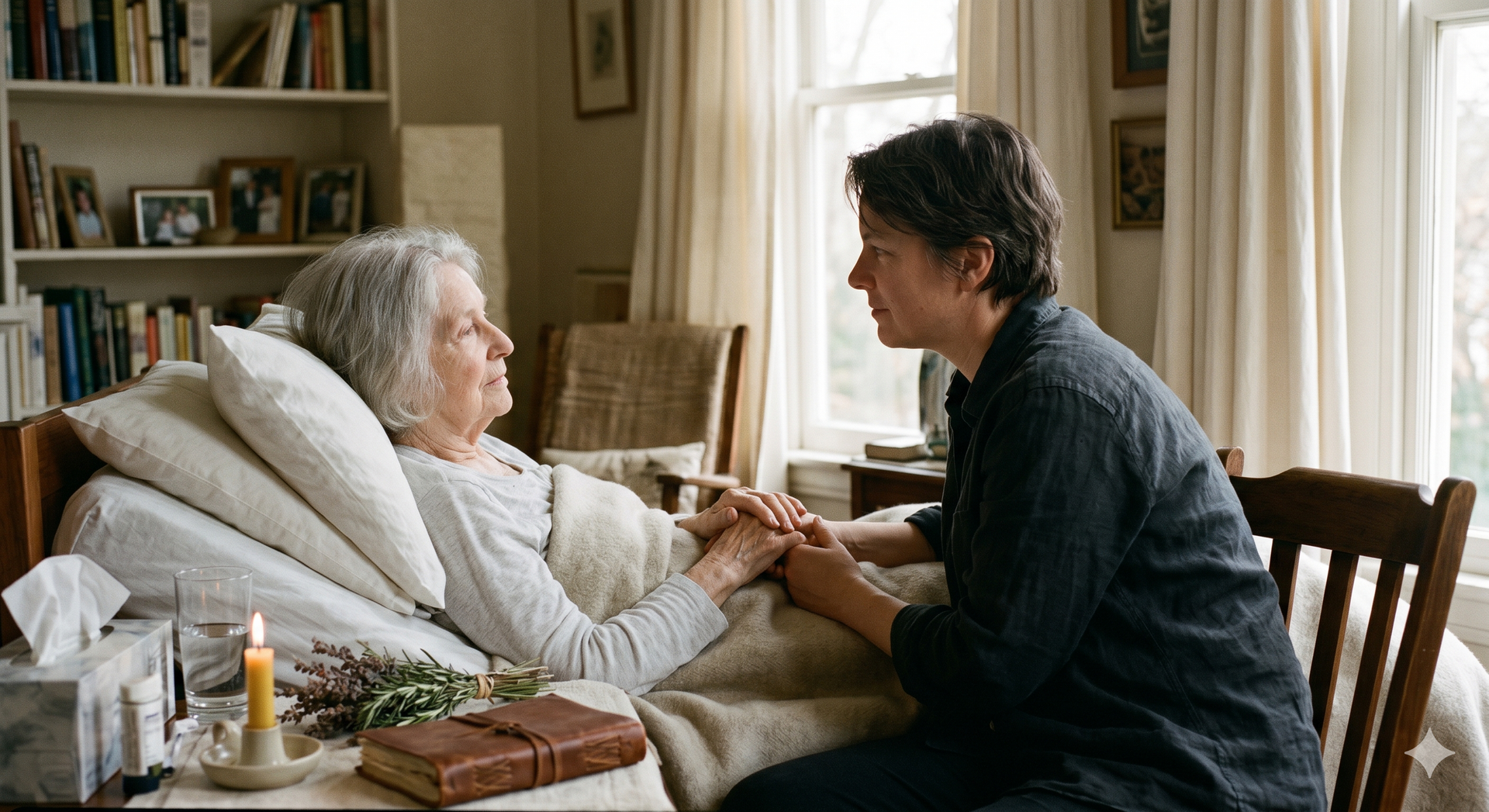
My work is not clinical. It is not grief counseling or hospice chaplaincy, though I hold deep respect for both. It is something older: the practice of accompaniment. Of being willing to enter the room where death is present and remain there, unhurried, unfrightened, attending to what is actually happening rather than what we wish were happening.
I work with people in our community who are navigating the dying of someone they love. And I work with people who are dying themselves, and who want a companion for that passage who speaks their language — who does not require them to translate their relationship to the Mysteries into terms a secular grief counselor or a hospital chaplain can understand.
You should not have to translate yourself at the end of your life, or at the end of someone else's.
What this work looks like:
It may be a series of conversations over the weeks or months of a dying process, for the dying person or their closest companions — or both, separately.
It may be ritual work, crafted specifically for this person and this passage — not generic, not imported wholesale from a tradition, but made for what is actually happening.
It may be preparation: for death itself, for what comes after, for the grief that will begin when the threshold is crossed.
It may be simply sitting. Being present. Saying: I am not frightened of this, and I will not leave you in it.
Our tradition has always known that the work of accompanying the dying is sacred. It is not an add-on to spiritual practice. It is one of its highest expressions.
If you are in the middle of this — if someone you love is dying, or if you yourself are approaching that threshold, and you are looking for a companion who speaks your language and will not flinch — I want to hear from you.
I hold a small number of spaces for death accompaniment work, available to people in the Pagan and contemplative communities both locally in Seattle and remotely worldwide.
Begin at tokeepsilent.me, or reach out directly. We will find the right way to begin.
— Silent
ABOUT THE AUTHOR
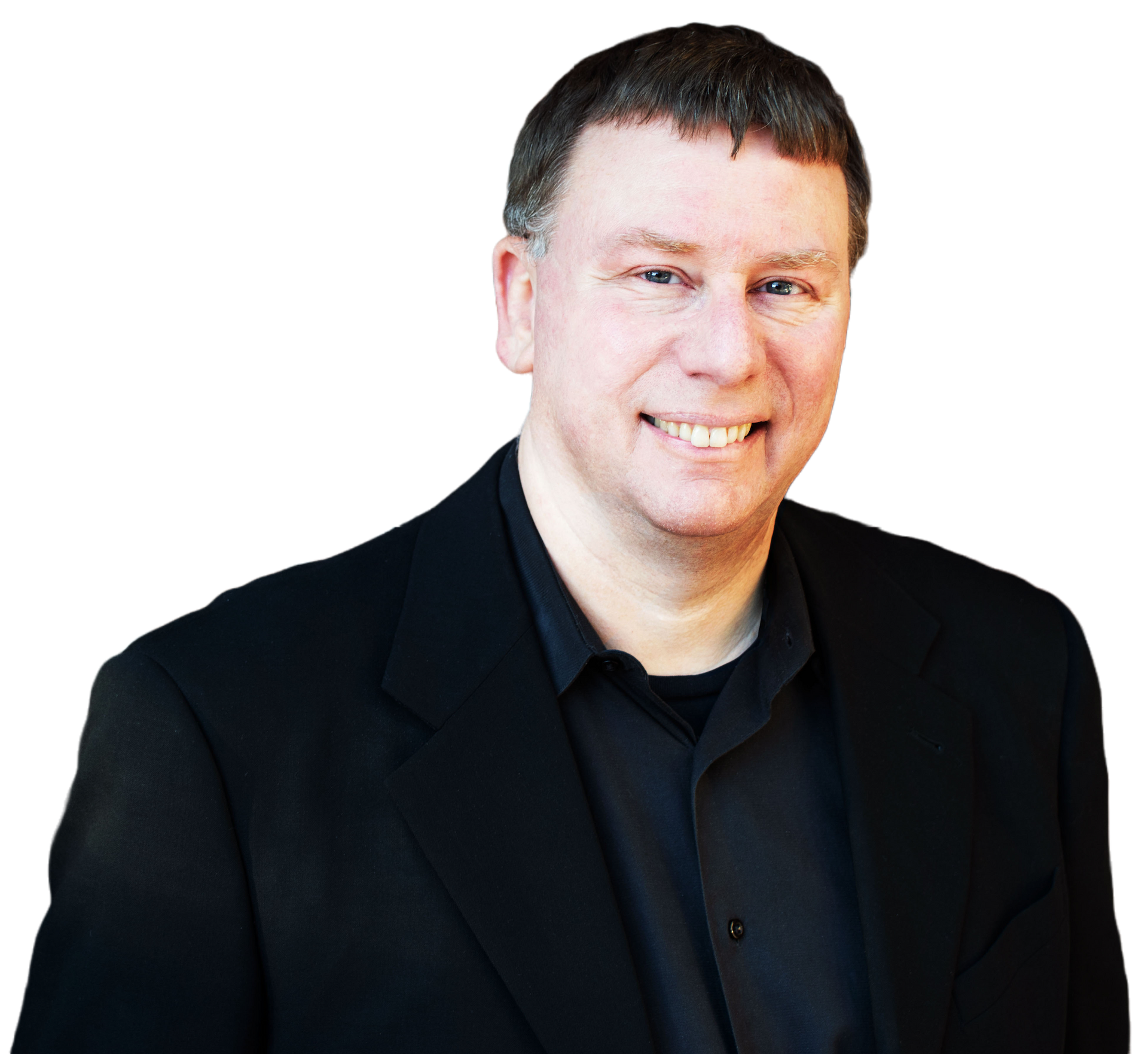
Silent
Silent provides the tools for seekers to recognize their path and enables self-reliance for spiritual and magickal growth.
Seekers gain insight from his work and find their inner calm from his ability to listen and help others reflect.