Silent
Silent provides the tools for seekers to recognize their path and enables self-reliance for spiritual and magickal growth.
Seekers gain insight from his work and find their inner calm from his ability to listen and help others reflect.

Navigating the Shadows:
Recently, a friend and colleague shared the end-of-life journey for his mother. She had been ill for some time. The family had reconciled itself that the end of days was nearing. However, the grief and frustration they experienced were magnified by the hospital staff's lack of communication regarding hospice care.
Death education for the dying and the circle of care around them is the most critical portion of end-of-life. Without understanding that their mother would not be returning, the support and comfort that hospice provides, the family was caught unawares, feeling abandoned in their darkest hours. A few days after entering hospice, their mother became an ancestor.
The unpreparedness deepened their sorrow. The absence of guidance and the stark reality of an impending loss without a plan intensified their anguish, reminding us all of the critical importance of compassionate and thorough end-of-life care discussions.
As a doula, providing education is equal to other parts of care.
Hospice vs. Palliative Care
While both hospice and palliative care share the goal of providing comfort and support, they differ in their approaches and timing:
Hospice Care: Hospice care is reserved for those in the final months of life, typically when curative treatments are no longer pursued, and the focus shifts entirely to comfort care. It involves a team-based approach to providing comprehensive support to patients and their families, ensuring a dignified and peaceful end-of-life experience. Hospice care is often provided in the patient's home but can also occur in hospice centers, hospitals, or nursing homes.
Palliative Care: Palliative care, on the other hand, is appropriate at any stage of a severe illness and can be provided alongside curative treatments. It focuses on relieving symptoms and improving quality of life from diagnosis onward. This broader scope allows for integrating palliative care in various healthcare settings, from hospitals to outpatient clinics.
Stages of Care at the End of Life
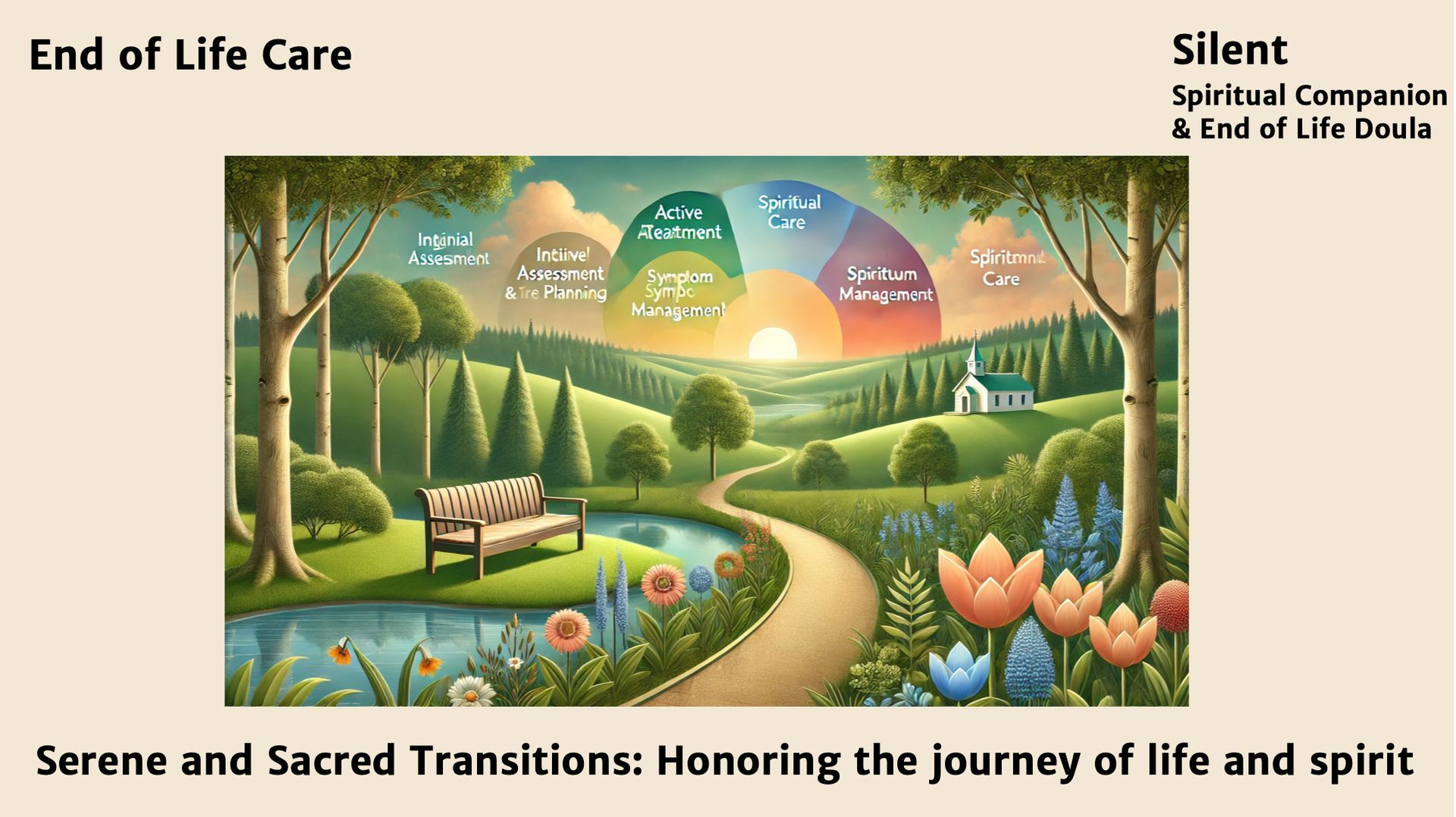
The journey through palliative care is a profound and transformative experience, both for the individual facing a life-limiting illness and for their loved ones. Palliative care is a holistic approach that seeks to improve the quality of life for patients and their families by addressing the physical, emotional, spiritual, and social needs associated with severe illness. Here, we delve into the five stages of palliative care, reflecting on the profound intersections of spirituality, life, and death.
Initial Assessment and Care Planning: The first stage involves a comprehensive assessment of the patient's physical symptoms, psychological state, social circumstances, and spiritual needs. A tailored care plan is developed when collaborating with the patient, their family, and the palliative care team. This plan addresses pain and symptom management, psychological support, social services, and spiritual care. This stage is critical in establishing trust and understanding the patient's values and goals.
Active Treatment and Symptom Management: At this stage, the focus is on managing pain and other distressing symptoms such as nausea, breathlessness, and fatigue. The palliative care team employs various medical and non-medical interventions to ensure the patient remains comfortable. This stage is not about curing the illness but enhancing the quality of life and maintaining dignity.
Psychological and Emotional Support: Palliative care acknowledges the profound emotional impact of life-limiting illness on patients and their families. This stage involves providing counseling, support groups, and therapy to help cope with anxiety, depression, and the existential distress that often accompanies serious illness. The emotional well-being of caregivers is also a priority, as is recognizing the burdens they carry.
Spiritual Care: Palliative care recognizes that spirituality is a core aspect of human existence. It addresses spiritual distress and facilitates spiritual well-being. This may involve connecting patients with chaplains and spiritual advisors or facilitating personal practices such as prayer, meditation, or rituals like kispum.
In the context of kispum, this could mean helping the patient and their family perform rituals that honor their ancestors, connect with their heritage, and find spiritual solace in their traditions.
End-of-Life and Bereavement Care: The final stage focuses on preparing for the end of life and supporting the family through grief. This includes managing symptoms during the active dying process, providing emotional and spiritual support, and helping families cope with grief after the death. Bereavement care continues for months after the death, ensuring that families have the resources and support they need to navigate their loss. This is the primary focus of my work as an end-of-life doula.
Kispum and Hospice
Incorporating the kispum practice into hospice enriches the experience of honoring and connecting with ancestors. The kispum ritual, traditionally performed to offer sustenance and maintain a bond with the departed, aligns with palliative care's holistic and compassionate nature. As patients and families engage in these rituals, they can find spiritual nourishment and a sense of continuity with their heritage.
This is a time of preparation and planning.
Kispum is an ancient Mesopotamian ritual of ancestor veneration involving offerings like water or libations to honor and connect with the deceased. This practice maintains a spiritual bond, providing comfort and continuity between the living and their ancestors.
For instance, a kispum ritual could be adapted to the hospice care setting. In this ritual, seekers pour libations or offer other symbolic gifts to their ancestors, fostering a deep sense of connection and peace.
This ritual bridges the physical and spiritual realms, providing comfort and meaning during the end-of-life journey. The spiritual guidance offered by palliative care professionals can help facilitate these rituals, ensuring they are meaningful and supportive.
Final Thoughts
The five stages of end-of-life care—initial assessment, active treatment, psychological support, spiritual care, and end-of-life bereavement—form a comprehensive approach to enhancing the quality of life for those facing serious illness. When intertwined with spiritual practices like kispum, palliative care addresses physical and emotional needs. It honors the spiritual journey, creating a holistic tapestry of care that respects and uplifts the human spirit.
ABOUT THE AUTHOR

Silent
Silent provides the tools for seekers to recognize their path and enables self-reliance for spiritual and magickal growth.
Seekers gain insight from his work and find their inner calm from his ability to listen and help others reflect.