Silent
Silent provides the tools for seekers to recognize their path and enables self-reliance for spiritual and magickal growth.
Seekers gain insight from his work and find their inner calm from his ability to listen and help others reflect.

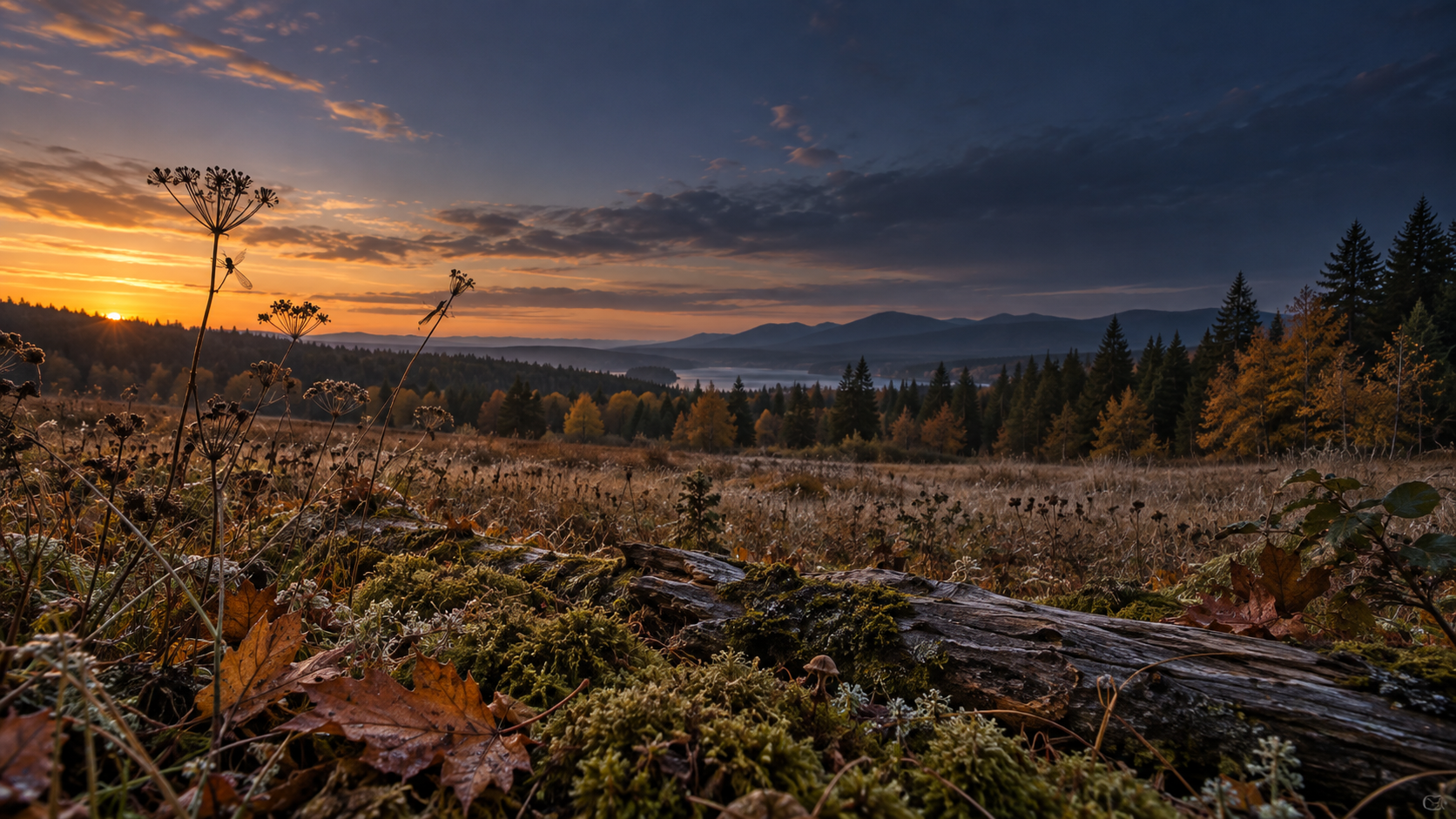
On Tuesday, at five minutes past five in the afternoon, Pacific time, the sun will cross directly over the equator, and for one instant the length of day and the length of night everywhere on earth will be, near enough, the same. Then the balance breaks. It has broken every year since before anyone was counting, and it will keep breaking whether or not a single person notices. Almost no one will.
I don't say that to scold anyone into noticing. I say it because the equinox is one of the rare moments the sky hands you actual, physical evidence of a claim that spiritual language usually has to argue for: that you live inside a system, not alongside one. The tilt of the planet that gives you this exact, brief equality of light is the same tilt that grew your food, that is right now pulling color out of the leaves outside your window, that will keep pulling the daylight shorter over your particular house whether you keep a garden or have never planted anything in your life.
Most of us were trained to use nature as a mirror. Autumn "means" letting go. Winter "means" grief. Spring "means" hope. It's not wrong, exactly, but it's thin, and it quietly keeps the natural world in a supporting role — scenery for the real drama, which is always us. The older traditions I've spent time inside, the Pagan calendar chief among them, ask something harder: not what autumn symbolizes, but what actually happens to you, biologically and spiritually, as the light drops. Mabon, the older name for this turning, was never a metaphor for a harvest. It was an actual harvest, with actual stakes, ahead of an actual season that could kill you if you'd misjudged it.
We've mostly lost the stakes, which is not nothing to grieve. Researchers studying what's now called ecological grief and solastalgia — the specific homesickness of watching a familiar landscape change around you without ever leaving it — have been documenting something that sounds almost obvious once it's said aloud: people's psychological well-being is tied to actual places, actual weather patterns, actual trees, in ways that don't reduce to metaphor. A warming climate, a vanished species, a differently-timed autumn are not symbols of loss. They are loss, and the grief is not standing in for something more real. This is worth sitting with plainly: your nervous system does not know the difference between "the world as backdrop" and "the world as body," even when your theology insists on the distinction.
So here is the question I'd rather leave open than answer for you: when did you last do something — not think something, not appreciate something from a window — that treated you as made of the same matter as the field going to seed outside, rather than a spectator standing safely apart from it?
I'm not asking whether you love nature. Most people who will read this already love nature, in the way you can love a landscape painting. I'm asking about the difference between loving a thing and belonging to it, and whether you've let that difference cost you anything this year — an afternoon, a habit, a comfort, an assumption about who's really in charge.
Sometime this week — the equinox itself if you can manage it, though the exact hour matters less than the honesty of the attempt — go outside to a place with visible sky. Stay long enough for one slow, complete breath, in and out, without reaching for your phone to mark the moment. Find one living thing that is not a pet, not a houseplant, not anything you're responsible for keeping alive: a weed in the sidewalk crack, a moss on the fence post, an insect finishing its year. Don't name it. Don't photograph it. Just let it be a fellow creature living under the same shortening light as you, on the same turning ground, asking nothing of you and owing you nothing back.
That's the whole practice. It will feel like too little. It usually does.
The balance the equinox marks was never going to hold — that's what makes it a hinge and not a resting place. The dark will keep winning, a little more each day, until December decides it's had enough and starts giving the light back. You don't get a vote in that. What you get a vote in is smaller and, it turns out, harder: whether you spend the season that's coming believing you live on the world, or remembering, in your body and not just your calendar, that you live inside it.
Sometime this week, go outside to a place with visible sky and stay for one slow, complete breath. Find one living thing you're not responsible for — a weed, a moss, an insect finishing its year. Don't name it or photograph it. Just let it be a fellow creature under the same shortening light, asking nothing of you and owing you nothing back.
ABOUT THE AUTHOR
Silent
Silent provides the tools for seekers to recognize their path and enables self-reliance for spiritual and magickal growth.
Seekers gain insight from his work and find their inner calm from his ability to listen and help others reflect.