Silent
Silent provides the tools for seekers to recognize their path and enables self-reliance for spiritual and magickal growth.
Seekers gain insight from his work and find their inner calm from his ability to listen and help others reflect.

A psilocybin drug is nearing FDA review, and the people building it say they do not yet know how much of the healing comes from the experience itself.
STAT reported this week that an analysis of recorded sessions from Compass Pathways' psilocybin trials found that about 80 percent of the time was spent in silence. The company's CEO, Kabir Nath, spoke at the STAT Summit in Boston on Wednesday. He said Compass expects to finish its rolling FDA submission this quarter and hopes to launch early next year. No psychedelic has FDA approval for this use yet, so all of that is still a plan.
Eighty percent silence. Someone lies down, music plays, and for roughly six hours the people in the room mostly say nothing. I find that detail more interesting than the response rates. Nath reported that about a quarter of patients had a clinically meaningful response after one dose and about 40 percent after a second. Those are the company's figures, not a regulator's.
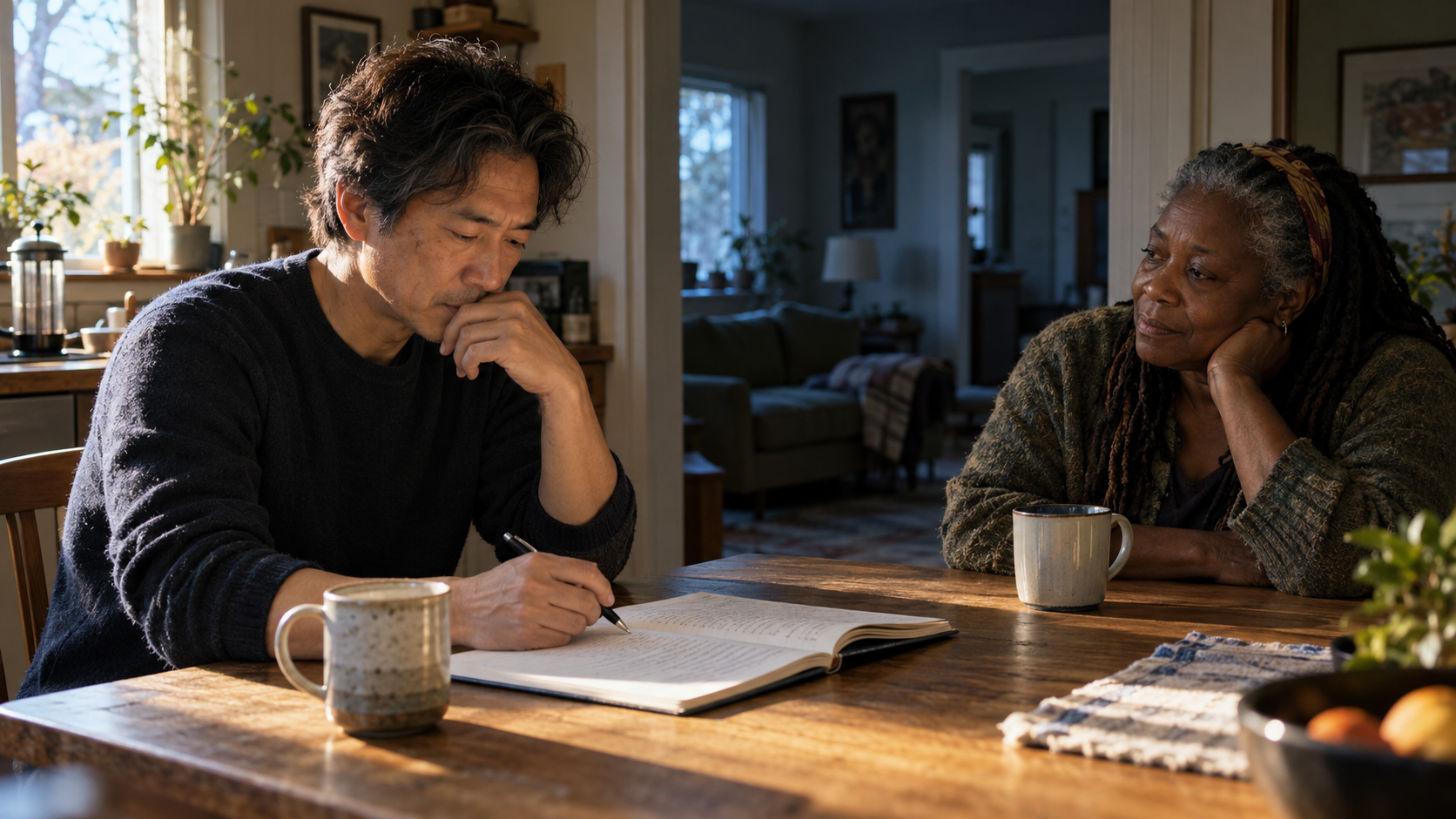
Anyone who has kept vigil at a bedside knows that kind of silence. The companion's temptation is to fill it with reassurance, interpretation, or a plan. Often the better work is to stay in the chair and let the person have what is happening to them. I suspect the people in those rooms were taught the same restraint, and I suspect it is harder than it sounds.
Steven Hyman, a Harvard professor and former director of the National Institute of Mental Health, told the same summit that researchers do not know how much benefit comes from the drug's chemistry and how much from the experience it produces. Some companies are developing compounds without the hallucinogenic effect, and Hyman said it would be a significant finding if those worked. He added that we do not know whether the experience is necessary.
Compass kept psychotherapy out of its trials on purpose. Its job, Nath said, is to develop a drug, not to dictate how physicians provide psychological care. That is a defensible position for a pharmaceutical company. It also means that when a person gets up from the couch, the medical story has a clear ending and the human one does not. Hyman said therapy afterward could help patients process strong emotions and memories. STAT's report does not say who will provide that once the monitoring ends.
I am not a clinician, and spiritual direction is not treatment. I have nothing to say about who should take this medicine, whether it works, or what a prescriber should do. Those belong to physicians and to clinicians trained to sit with the experience.
My question is smaller and harder. People come out of these sessions reporting a dead parent in the room, or terror with no floor under it, or a sense that everything is one thing, or a presence they would call God, or nothing at all. I do not need to rule on what they met. Mystery can stay Mystery. Whether it was neurochemistry, Presence, or both at once, the practical question is the same: what is this experience asking of my ordinary life?
The old stories seem to know this. Inanna goes down through seven gates and gives up a garment at each one. At the bottom she hangs on a hook, dead. Most people remember the descent. Fewer remember what follows, which is that she returns and the underworld sends a bill. Someone has to go back in her place. The descent gets the attention. The return is where the debt comes due.
A person who has seen something and goes home to the same job, the same marriage, and the same silence at dinner has not been returned. They have only been put back.
If what you saw was true, even partly, which part of your current life would have to change? Are you hoping it was only a symptom?
Stay with that a moment before you answer it.
This is for any experience that rearranged you: a psychedelic session, a death in the family, a birth, a breakdown, a night you cannot explain.
Within a few days, write one plain paragraph describing what happened. Leave out interpretation. Write what you saw, felt, and heard, as if for a stranger. Put it away.
A month later, read it and then write a second paragraph that is only about behavior. Not what you now understand. What you have done differently, and what you have still not done. Pick one thing from the second paragraph and do it this week.
If you take medication, do not change it on the strength of anything you read here. Talk to ypor medical caretaker who prescribes it.
Six hours is a short time. The rest of your life is the long session, and most of it is also silent. What are you listening for in it?
— Silent
ABOUT THE AUTHOR

Silent
Silent provides the tools for seekers to recognize their path and enables self-reliance for spiritual and magickal growth.
Seekers gain insight from his work and find their inner calm from his ability to listen and help others reflect.