
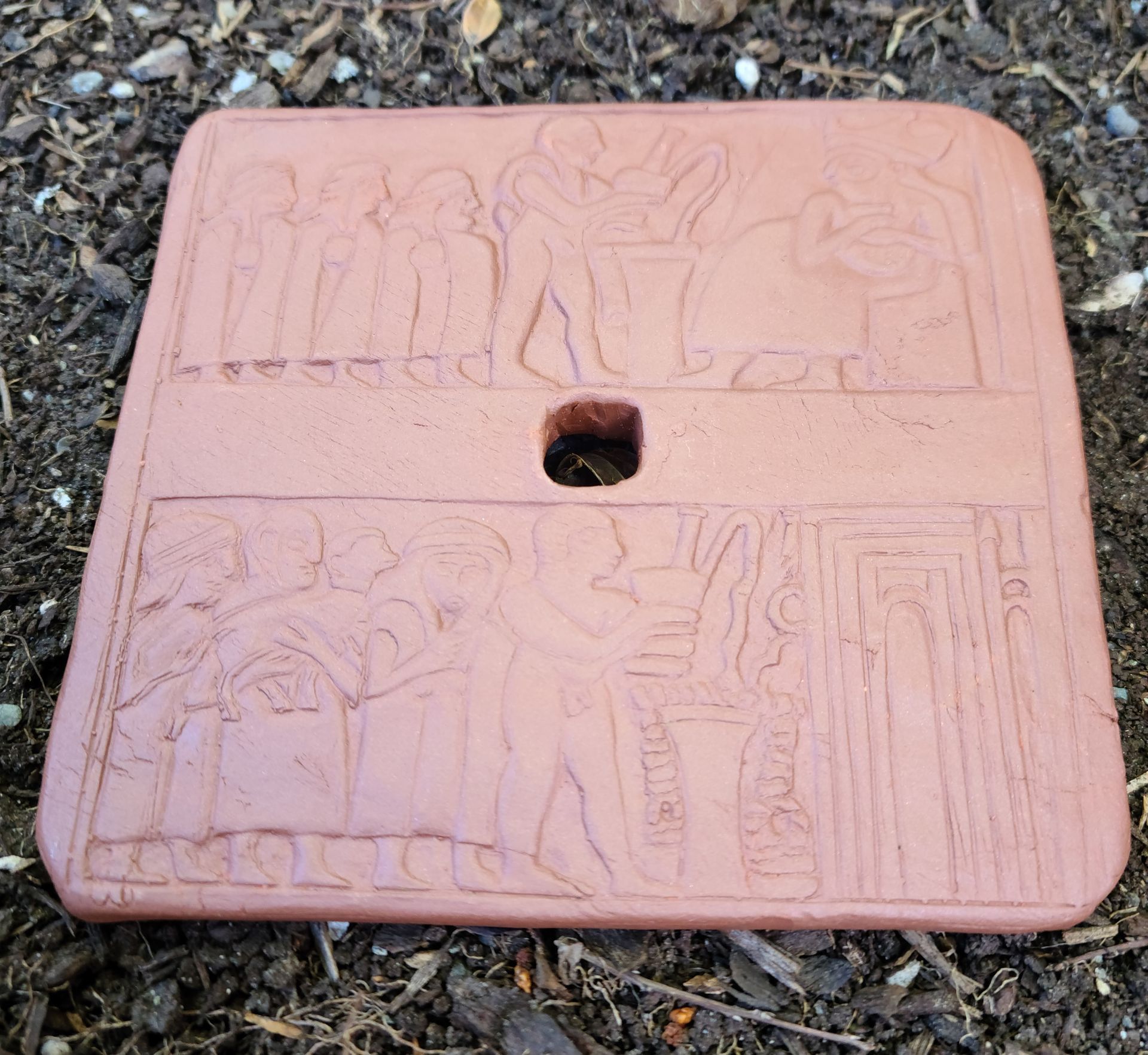
Kispum Tablet
$50.00
Kispu/kispum is, at its heart, care for the dead—food and drink offered so the ancestors are not abandoned.
A simple, faithful way to work with a kispum/libation tablet today:
- Set the place: an offering table/plate, a cup of clean water (or beer), a small piece of bread/cake, and the tablet over earth (ground, grave, or a pot of soil). (The “offering table” + “water pouring” pattern shows up strongly in the sources.)
- Name the dead: speak the names aloud (or read a list). Naming matters—this rite is relationship, not performance.
- Pour the libation: pour water slowly through the tablet opening into the soil, with a short phrase like: “May this water reach you; may you be at peace; may our bond remain.”
- Offer the bread: set it down for a time, then return it to the earth (or dispose of it respectfully outdoors).
- Close: gratitude, a moment of silence, and tidy the space.
Why the hole matters: it makes the offering directional. The offering isn’t just “spilled”—it is sent downward, echoing texts that speak of pouring into a libation pipe (a-pa4) “into the dust of the netherworld.”
Price is inclusive of shipping.
SPECIFICATIONS
HOW TO USE
Purchase a tablet as part of an ongoing kispum ritual for your departed. Place them on the ground outside or in a potted plant indoors.
One tablet may be used for multiple departed or you may purchase one for each.
DETAILS
When do you pour water?
New moon (monthly): one text tradition explicitly connects the rite at the grave with the new moon, including laying bread for the dead.
Dark/black moon / “30th day”: some Old Babylonian material ties the monthly kispu to the “30th day” and a “black moon” moment (a liminal day tied to purification as well).
Anniversaries & festivals: some traditions tie broader ancestor observances to set times of year (for example, kispum-associated festivals), but the steady heartbeat is the monthly tending.
Why it’s done
Three layers—practical, relational, spiritual:
- Practical (in their worldview): the dead fear thirst; water-pouring is central.
- Relational: it sustains kinship across the veil—what modern grief theory calls continuing bonds, but the ancients lived as daily religion.
- Spiritual/ethical: it’s hospitality. You don’t abandon your people because they crossed a threshold.



BESTSELLERS