Chapters of You
Silent • November 24, 2023

Tailoring Your Journaling Practice to Life's Many Seasons

Journaling is more than record-keeping; it is a journey of self-exploration and growth.


People often have various questions about journaling, especially when starting or looking to deepen their practice. Using a theme for your journaling practice can be essential in helping you write, unblock writer’s block, and create a regular practice. Your theme may be no theme (See Smash Journaling).


When it comes to journaling, the best method is the one that resonates with your lifestyle and needs of the moment. It's a practical and flexible tool for self-expression and personal development, providing insight into your thoughts and behaviors.


Some examples

Bucket list Journaling.


A bucket list journal is essential to personal development because it is a tangible focus of your goals and aspirations. It encourages you to articulate and commit to the experiences and achievements you aspire to. By regularly revisiting and updating your bucket list, you maintain a clear vision for your future, which can motivate you to take action, track your progress, and live life more intentionally. This journaling can also help you reflect on your values and priorities, ensuring that your personal development aligns with what truly matters to you.

Smash Journaling.


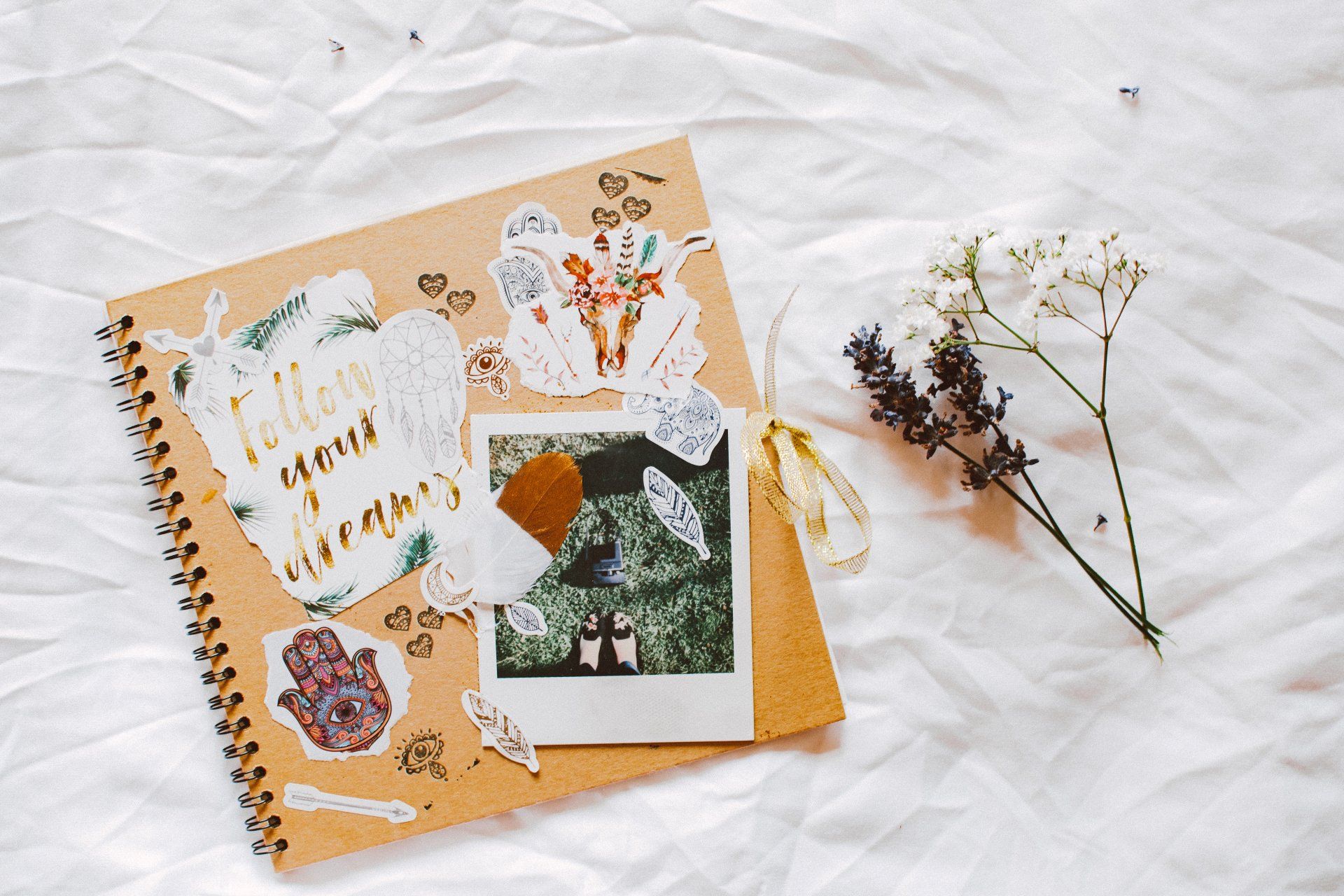
It is the antithesis of structure. A dynamic and unstructured approach that combines elements of writing, drawing, and pasting various items onto pages. Unlike a scrapbook, which is often carefully curated and neatly organized, smash journaling is about spontaneity and randomness. It involves "smashing" whatever you like onto the pages—photos, ticket stubs, doodles, stickers—alongside your written thoughts, creating a chaotic yet deeply personal journal that captures the essence of your daily life and inspirations. It's a less rule-bound and more expressive way to document your experiences.

Autobiography. 


I’m young. Why would I write an autobiography?


This serves as a powerful tool for self-reflection and personal growth. It allows you to document and process your experiences, understand the shaping of your identity, and recognize patterns in your life. This can provide clarity and insight into who you are and wish to become. 

Additionally, it creates a personal archive that you can look back on in the future to appreciate your journey and progress.

Morning Journal.


This is a tool for reflection and planning used at the start of your day. You create and update a set of affirmations periodically to serve your needs best. You can reflect and journal each part in the same or your daily journal.


The essential parts typically include:


  1. Gratitude List: Writing down what you are thankful for can foster a positive mindset.
  2. Intentions for the Day: Setting goals or intentions to give your day purpose and direction.
  3. Affirmations: Positive statements to encourage self-belief and confidence.
  4. Reflections: Briefly review the previous day to assess what was learned and what could be improved.
  5. Planning: Outlining critical tasks and priorities for the day ahead to organize your thoughts and activities.

Celebrate Connections.


Journaling about the people who touch your life is an ode to relationships. It explores how they shape you, reflecting on shared experiences and the qualities you admire. This practice reinforces your connections and deepens your understanding of the human experience.

Five writing prompts to get you started.


  1. Reflections on Change: Write about one thing that has changed in your life recently. How has this change affected your daily routine or your perspective on life?
  2. Overcoming Obstacles: Think of a challenge you faced today, big or small. How did you handle it, and what did you learn from the experience?
  3. Joy in the Ordinary: Identify a mundane moment from your day that brought you unexpected joy. Why do you think it made you feel this way?
  4. Gratitude Moment: Choose three things you are grateful for today and explore why they hold significance for you.
  5. Future Self: Write a letter to your future self about your hopes and where you see yourself a year from now. What advice would you give to your future self?


Wrap up.


It's not about the elegance of your words but the honesty of your expression.

Start simple, with what feels suitable for you. Different journaling styles are oriented to different times and phases of your life, just like clothes. Some days you need a raincoat, other days sunglasses. Use these styles as you see fit and as the mood strikes you.

ABOUT THE AUTHOR


Silent


Silent provides the tools for seekers to recognize their path and enables self-reliance for spiritual and magickal growth. 


Seekers gain insight from his work and find their inner calm from his ability to listen and help others reflect.

By Silent May 28, 2026
For the Pagan and Contemplative Community
By Silent May 27, 2026
There is a grief that arrives before the death. It does not announce itself. It does not have a name that anyone uses at the dinner table, or in the waiting room, or in the parking lot of the care facility where you sit in your car for a few minutes before going in, gathering yourself. It lives in small moments. The first time they didn't recognize you. The day you realized you were making decisions for them that they would have hated. The night you caught yourself hoping — just for a second, just once — that it would be over soon, and then spent the next three days punishing yourself for the thought. This is called anticipatory grief. And it is real, and it is heavy, and almost no one will name it for you while you are living inside it, because you are the strong one, and the person you are losing is still here, and grief, we have been told, comes after. It doesn't always come after. Sometimes it comes alongside. Caregiving is one of the most demanding things a human being can do. It asks you to be present to someone else's diminishment, day after day, while managing your own fear and your own exhaustion and your own sadness — and while the world around you continues as though nothing unusual is happening. You go to the grocery store. You answer emails. You show up. You are praised for your strength, which is a kindness people offer because they don't know what else to give you. What you actually need is someone who will let you put the strength down for an hour. Not fix you. Not give you a plan. Not tell you that you're doing a great job, or that they couldn't do what you're doing, or that everything happens for a reason. Just someone who will sit with you in the weight of it. Who will not be frightened by what you are carrying. Who will let you say the unsayable things — the anger, the ambivalence, the love that is so tangled up with loss that you can no longer tell them apart. That is what I offer. I am a death doula and spiritual director. I work with caregivers who are in the middle of it — not at the end, not after, but now, in the long middle stretch where the grief has no official start date and the world has not yet given you permission to feel it. We meet, usually by video, for an hour at a time. I listen in a particular way — not for problems to solve, but for what is actually present beneath the exhaustion and the competence and the careful management of everyone else's emotions. You do not have to have it together when you come into this space. That is the point of it. A few things I will not do: I will not tell you how to grieve correctly. There is no correctly. I will not rush you toward acceptance or silver linings. Some things do not have silver linings, and pretending otherwise is a small violence. I will not give you more to manage. You are already managing too much. What I will do is be present — fully, unhurriedly, without an agenda — for whatever you bring into the room. If you are a caregiver and you are reading this and something in you recognized itself in these words, that recognition is an invitation.  I have a small number of spaces available for caregivers who are navigating the approach of death alongside someone they love. The intake questions at tokeepsilent.me are where we begin. Or you can reach me directly. There is no script for this conversation. We simply start. — Silent
By Silent May 24, 2026
You have prepared for everything. The board presentation. The acquisition. The restructuring conversation you had to have with someone you respected. The market downturn you saw coming and the one you didn’t. You have sat in rooms where the stakes were real and kept your composure, and you have learned — through repetition and cost — how to carry weight without showing it. You have not prepared for this. No one does. Not really. The death of a parent, a spouse, a peer your own age. A diagnosis with a timeline attached. The slow, grinding recognition that someone you love is leaving — not suddenly, but in increments, and there is nothing to negotiate, no alternative proposal to bring to the table, no strategic pivot available. This is not a problem to be solved. It is a threshold to be crossed. And most people cross it alone, or nearly so — surrounded by well-meaning people who don’t know what to say, medical professionals focused on the body, and a culture that has made death so invisible that we have lost the language for it entirely. I am a death doula. That phrase means different things in different contexts. In mine, it means this: I sit with people who are navigating the approach of death — their own or someone they love — and I offer skilled, unhurried companionship for the crossing. Not therapy. Not hospice care. Not grief counseling, though grief is present in every conversation. What I offer is something older than all of those things. It is the human practice of bearing witness — of being present without flinching, without fixing, without rushing anyone toward a resolution they are not ready for. I work with a small number of people at a time, by referral and by invitation. My clients are often high-functioning, highly capable people who have spent their professional lives solving problems and have arrived at the one thing that will not be solved. They need someone who will not be undone by its weight. Someone who has sat with death before and is not afraid of it. That is what I am. The work looks different for each person. Sometimes it is sitting with a CEO whose mother is in hospice and who has not yet cried — not because he doesn’t feel it, but because he doesn’t know how to begin, and the people around him need him to be okay. We create a space where he does not have to be okay. That is the whole of it. Sometimes it is working with a woman who received a diagnosis six months ago and has been managing everyone else’s feelings about it ever since. We turn that around. For one hour, no one else’s feelings matter. Only hers. Sometimes it is a caregiver — a spouse, an adult child — who is exhausted in a way that sleep does not fix, carrying a grief that has not been permitted to be grief yet because the person they are losing is still here. We name that. We sit with it. We find language for what has no name. Sometimes it is preparation for the dying person themselves, or for those who will remain. What needs to be said. What needs to be forgiven? What can be laid down before the end, and what must be carried. Death is not the enemy of a good life. It is its completion. But we have forgotten how to treat it that way. We have medicalized it, hidden it, rushed past it, outsourced it entirely. And so when it arrives — as it always does — we find ourselves without a map, without a guide, without the language for what we are experiencing. You do not have to cross this threshold without accompaniment. If you are navigating the approach of death — your own or someone you love — and you are looking for skilled, unhurried companionship, I have a small number of spaces available. Begin with the intake questions at tokeepsilent.me , or simply reach out directly. There is no wrong way to begin this conversation.  — Silent
Show More