Reflecting on Being a Pagan Man in the Modern World
Silent • April 17, 2024

In the modern tapestry of spirituality, being a Pagan involves a deep connection to ancient practices and the rhythms of the natural world, integrated with the realities of contemporary society. As a Pagan man, my journey is both a personal exploration and a public declaration of a faith that is often misunderstood in the mainstream.


For Pagans, our practice is not merely about following the cycles of the Earth or celebrating the solstices. Still, it embodies a broader worldview that values respect for nature, the importance of ritual, and the interconnectedness of all life. Whether one identifies with the divine masculine, feminine, or beyond, these tenets are vital, reflecting a spectrum of spiritual expression that honors individual and communal experiences.


Technology and urbanization have dramatically reshaped our environments, sometimes creating a sense of disconnection from the natural world. Yet, they also offer new platforms for Pagans to share knowledge, connect across distances, and build supportive communities. Digital spaces serve as contemporary forums for ritual sharing, wisdom exchange, and spiritual support, helping bridge the ancient with the digital.


Navigating modernity as a Pagan also brings unique challenges, including confronting misconceptions and stereotypes that can lead to social stigma or misunderstanding., The path requires profound courage to live authentically, and we often need to educate others about our diverse beliefs and practices. This journey is a testament to our strength and resilience.


Ethically, Paganism prompts us to act with integrity and responsibility, guiding us in making choices that respect our spirits, the well-being of our communities, and interconnectedness with Nature and the Divine.

This ethical stance underpins our interactions, ensuring they are marked by honesty and respect.


In essence, being a Pagan today is about finding balance—integrating the wisdom of ancient traditions with the pressures and possibilities of modern life, holding space for the sacred in the mundane, and fostering profound insights into both the self and the universe. It is a path of continuous growth and reflection, a journey that challenges and enriches us, inspiring us to constantly evolve and deepen our understanding.

ABOUT THE AUTHOR


Silent


Silent provides the tools for seekers to recognize their path and enables self-reliance for spiritual and magickal growth. 


Seekers gain insight from his work and find their inner calm from his ability to listen and help others reflect.


By Silent June 12, 2026
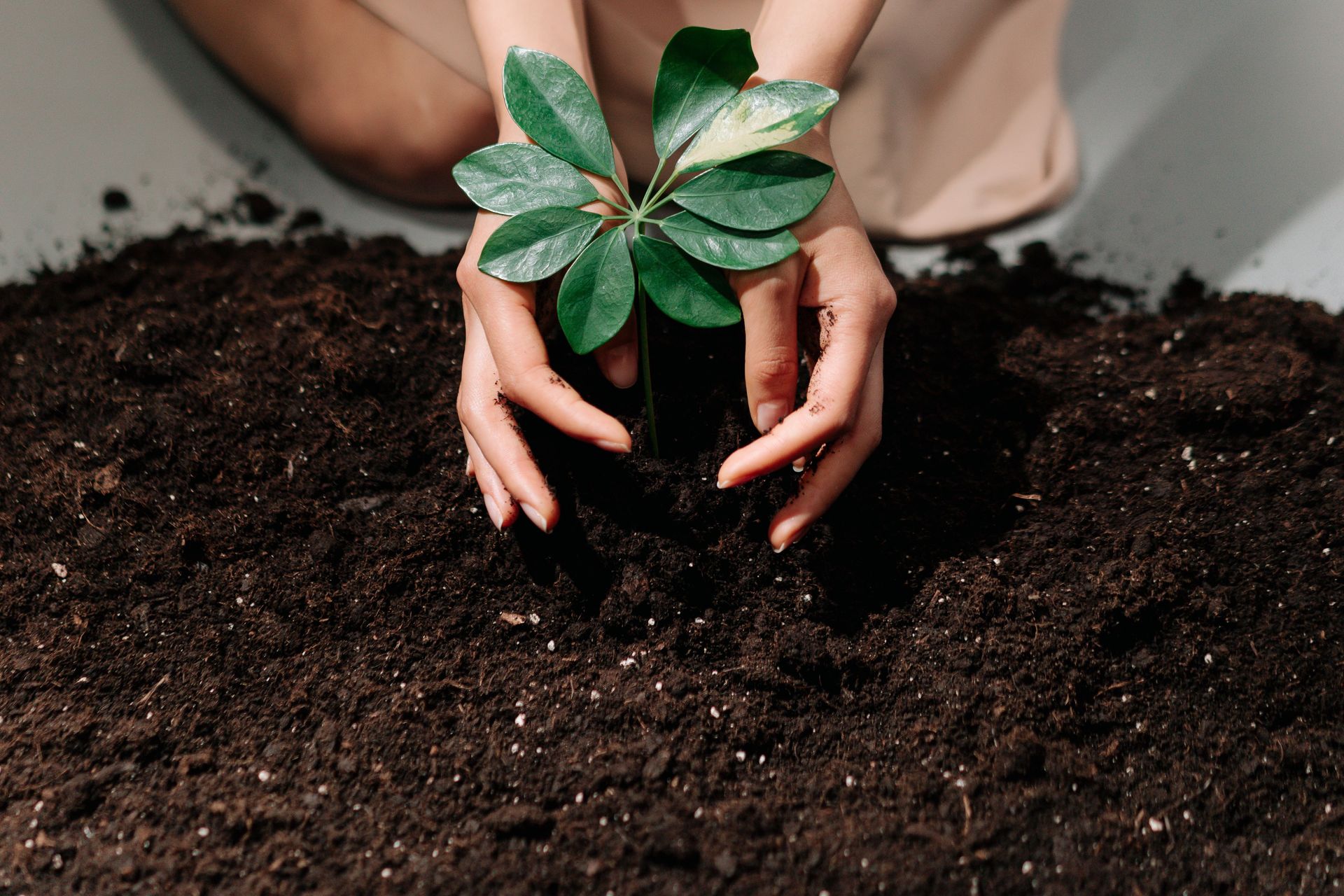
Walk into any forest in the Cascades and you are standing on the dead. The fir that fell forty years ago is now the nurse log feeding a row of saplings. The salmon carried uphill by an eagle became the nitrogen in the cedar's needles. Nothing in that forest is wasted, and nothing in it is afraid. We have built an entire industry on pretending we are exempt from this. We drain the body of its blood, fill it with preservatives, seal it in lacquered hardwood, and lower it into a concrete vault—as if the earth were a contamination to be defended against rather than the place we came from. Cremation, for all its simplicity, burns fossil fuel and sends the body skyward as carbon. There is another way, and it began here in Washington. Human composting—the law calls it natural organic reduction—was legalized in this state in 2019, the first in the nation. The process is unhurried and honest. The body, unembalmed, is laid into a steel vessel and surrounded by wood chips, alfalfa, and straw. No chemicals are added. The microbes that already live on the plant material, and on us, do the work they have always done. Over eight to twelve weeks, the body becomes soil—about a cubic yard of it, dark and alive. Families may take some home for a garden or a tree, or donate it to forest conservation land. What was a person becomes, quite literally, ground for new growth. I have sat with the dying, and I can tell you that the question underneath most deathbed fear is not what happens to me? It is did I matter, and will anything of me remain? The Hávamál answers plainly: cattle die, kin die, the self dies too—but what one leaves behind endures. We usually read that as reputation. I have come to read it more literally. A body that becomes soil leaves something behind that you can hold in your hands. Something that feeds. For those of us who keep the old ways, this is not innovation. It is restoration. Our ancestors were returned to barrows and bogs and burial mounds, given back to the land that fed them. The vessel and the alfalfa are new; the covenant is ancient. The earth gives, and the earth receives. Every harvest festival we keep is built on that exchange. It would be strange to honor the cycle all our lives and then opt out of it at the end. This choice is now legal in a dozen states and counting. If it speaks to you, say so—out loud, in writing, to the people who will one day carry out your wishes. Death plans left unspoken become burdens; death plans spoken become gifts. A leaf falls. A seed sprouts. The tree does not grieve the leaf, and the soil does not refuse the seed. When my own time comes, I intend to be useful one last time. That, too, is a kind of prayer.  —Silent
By Silent May 28, 2026
For the Pagan and Contemplative Community
By Silent May 27, 2026
There is a grief that arrives before the death. It does not announce itself. It does not have a name that anyone uses at the dinner table, or in the waiting room, or in the parking lot of the care facility where you sit in your car for a few minutes before going in, gathering yourself. It lives in small moments. The first time they didn't recognize you. The day you realized you were making decisions for them that they would have hated. The night you caught yourself hoping — just for a second, just once — that it would be over soon, and then spent the next three days punishing yourself for the thought. This is called anticipatory grief. And it is real, and it is heavy, and almost no one will name it for you while you are living inside it, because you are the strong one, and the person you are losing is still here, and grief, we have been told, comes after. It doesn't always come after. Sometimes it comes alongside. Caregiving is one of the most demanding things a human being can do. It asks you to be present to someone else's diminishment, day after day, while managing your own fear and your own exhaustion and your own sadness — and while the world around you continues as though nothing unusual is happening. You go to the grocery store. You answer emails. You show up. You are praised for your strength, which is a kindness people offer because they don't know what else to give you. What you actually need is someone who will let you put the strength down for an hour. Not fix you. Not give you a plan. Not tell you that you're doing a great job, or that they couldn't do what you're doing, or that everything happens for a reason. Just someone who will sit with you in the weight of it. Who will not be frightened by what you are carrying. Who will let you say the unsayable things — the anger, the ambivalence, the love that is so tangled up with loss that you can no longer tell them apart. That is what I offer. I am a death doula and spiritual director. I work with caregivers who are in the middle of it — not at the end, not after, but now, in the long middle stretch where the grief has no official start date and the world has not yet given you permission to feel it. We meet, usually by video, for an hour at a time. I listen in a particular way — not for problems to solve, but for what is actually present beneath the exhaustion and the competence and the careful management of everyone else's emotions. You do not have to have it together when you come into this space. That is the point of it. A few things I will not do: I will not tell you how to grieve correctly. There is no correctly. I will not rush you toward acceptance or silver linings. Some things do not have silver linings, and pretending otherwise is a small violence. I will not give you more to manage. You are already managing too much. What I will do is be present — fully, unhurriedly, without an agenda — for whatever you bring into the room. If you are a caregiver and you are reading this and something in you recognized itself in these words, that recognition is an invitation.  I have a small number of spaces available for caregivers who are navigating the approach of death alongside someone they love. The intake questions at tokeepsilent.me are where we begin. Or you can reach me directly. There is no script for this conversation. We simply start. — Silent
Show More